
• Skip to primary navigation
  • Skip to main content
  • Skip to primary sidebar
YouFeelGreen

YouFeelGreen

Your green news

  • Home
  • Blog
  • Contact form

Blog

“HeartH” and Me

May 12, 2020 By Viola 4 Comments

About me

Hi everyone, I’m Viola and I’m a 9 years old girl well I’m going to be 10 soon, my passions are dancing, drawing and fashion even if I like to change a lot, do you stay five hours in the morning to choose what to wear?

Well, I do, contact me and I will answer you back and you know what, we may even become friends.

✿◕ ‿ ◕✿

Magic ⛵🌊

I have a wonderful light blue sailing boat and I love the sea, what do you prefer mermaid/fairy/witch/gnomes or wizards contact me and I’ll be happy to see.

🧚🧜🧙🧜‍♂️

My Community Project “HeartH”

I’m preparing a community project “HeartH” … Well, you may be saying OMG she spelt it wrong well no because it’s a mix of hearth and earth so here we are HeartH.

🌎💟🌍💟🌏💟
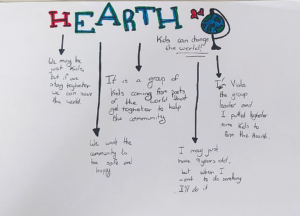
disegno schema HeartH


I’m going to make a group to save the world by making charity or cleaning the sea etc.

Technology 🖥️📱📶

It is from when I was small that I wanted to change the world, I love nature but people play video games instead of looking at their surrounding. Even I like technology, but without exaggerating.

To the world 🤝🙋

If everyone does their part nature will be back again, that’s why will do demonstrations asking some coins to make good actions, just some coins to save the world.

Mother Nature 🌈🌊🐝🐞⚡

I would like to represent the new generation of mother nature in flesh and blood.

Expanding 👫👭

I would like to start with 2/3 friends and then expand it in more kids, I will get some people I know from other parts of the world to be the leaders of the group in that city.
It’s really difficult to do everything, but when I want to do something I just do it.

Join the group 💪😍

If you want to be part of the group contact me I’ll be happy to welcome you, don’t be shy, I’ll give you more information when you contact me, both boys and girls can join and whatever age they have, but remember to ask your parents.

For now, I’m only in Malta, but if I expand it I’ll keep you informed.

Video 🤳

Send me a video of you doing something good to the world and I will be happy to see it.

viola.hearth@gmail.com

A funny mascot

Wait a second I didn’t talk to you about our mascot Skype my beautiful rabbit, isn’t it funny a rabbit as a mascot?

viola project

★~(◠‿◕✿)

Online

For now, everyone has to stay home to be safe so our group is going to meet online and if you are bored even you can play with your friends online. Covid-19 can’t stop our creativity.
Stay home, stay safe

*•.¸♡ Viola ♡¸.•*

Contact me:
viola.hearth@gmail.com

Filed Under: Applied Ecologist, Ecological Inspirations, Ecology Community, education, family, HeartH, kids, News, Recycling, The Ecology Journal, Uncategorized

Ncc e Taxi: ecco i pannelli di contenimento del Covid-19

April 27, 2020 By Valentina Maini Leave a Comment

ncc coronavirus

Il Coronavirus continua ad essere al centro dell’attenzione. Autisti, tassisti e tutti i lavoratori che appartengono a questa categoria devono adeguarsi per il contenimento del Covid-19.

Non c’è più molto tempo, chi vuole continuare a lavorare deve organizzarsi preventivamente nel rispetto della salute collettiva. Oltre alle misure protettive per la persona sarà necessario proteggere e isolare l’ambiente all’interno del veicolo.

CHIEDI UN PREVENTIVO
WHATSAPP
misure contenimento covid 19 per taxi e ncc

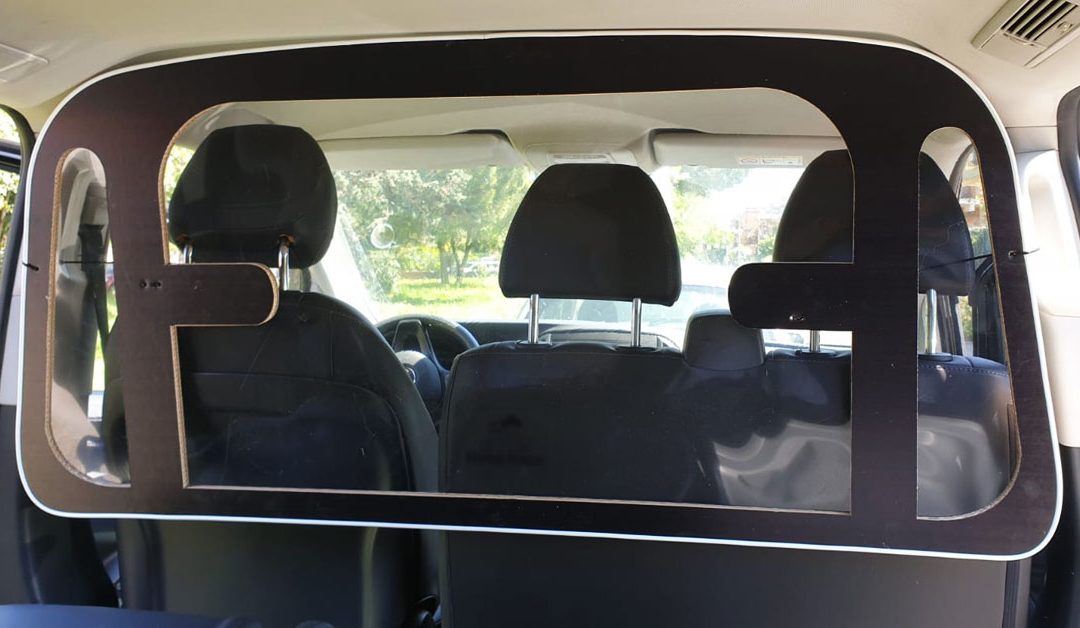
Isolamento con pannelli

I passeggeri potranno avere uno spazio riservato adeguatamente isolato da quello del guidatore per evitare al massimo il contagio del virus.

Coloro che vogliono continuare a dare il loro servizio in modo professionale e sicuro, dovranno attrezzare i veicoli di lavoro con dei pannelli che possano concretamente limitare il contatto tra i clienti e l’autista.

Quanto costa attrezzare il veicolo per il Coronavirus

Fortunatamente esistono soluzioni economiche che possono rispondere a tutte queste esigenze lavorative. E’ il momento di organizzarsi, perché solo coloro che si adegueranno ai nuovi sistemi potranno continuare a svolgere il loro lavoro in tutta sicurezza.

Sono arrivati i PANNELLI DIVISORI con microfilm trasparente omologato. Il materiale è ecologico e assolutamente garantito per un corretto isolamento all’interno della vettura. Inoltre ne viene rilasciata una certificazione dell’installazione che garantisce un corretto posizionamento all’interno dell’abitacolo che non interferisce con i punti di attacco per la sicurezza dei passeggeri. Un pannello che separa l’autista dai passeggeri nel totale rispetto delle leggi.

CHIEDI INFORMAZIONI SU WHATSAPP

Tranquillizzare ogni cliente

Ci rivolgiamo a tutti i Tassisti, a coloro che hanno la concessione di Noleggio con conducente e che trasportano persone. In questo momento i clienti hanno paura e tendono a preferire una corsa con un veicolo attrezzato per il Covid-19.

La nuova ERA dei servizi di trasporto di persone

Non importa quanto durerà questa paura e il rischio legato al Coronavirus, stiamo entrando in una NUOVA ERA in cui diventerà “normale” pretendere una protezione ben visibile sia per preservare la salute che per offrire un’immagine più discreta e professionale del trasporto.

Nello specifico, coloro che vogliono adeguare il proprio mezzo attrezzato al trasporto di persone, dovranno solo montare questi pannelli divisori.

Poche decine di euro per una soluzione definitiva

Fortunatamente, al contrario di altre categorie di lavoratori, per essere in linea con il nuovo trend di contenimento del Covid-19, basteranno poche decine di euro.

I proprietari di una berlina potranno acquistare il pannello con una spesa che si aggira tra i 25 e i 55 euro compreso il montaggio.

Per i van, invece, sarà possibile attrezzarsi con una spesa compresa tra i 60 e i 75 euro risolvendo in modo definitivo il problema di contatto tra passeggeri e autista.

ACQUISTA IL PANNELLO

Attenzione a non montare pannelli improvvisati con soluzioni non consone allo scopo di contenimento del -Covid-19. E’ importante acquistare un prodotto certificato che sia adatto allo scopo.

I pannelli che vi proponiamo sono realizzati con una pellicola di 800 micron in PET e sono personalizzabili con il logo, il numero di telefono o il vostro sito web ben visibile per i passeggeri durante tutta la corsa.

#YouFellGreen è il portale che si occupa da sempre dell’ecologia ed eco-sostenibilità a 360°. Cerchiamo di selezionare per voi i migliori prodotti e le soluzioni più indicate alle vostre esigenze.

Grazie al nostro team di esperti possiamo aiutare tutti coloro che ne hanno bisogno a trovare la soluzione migliore per le loro esigenze.

ORDINA UN PANNELLO


Filed Under: Uncategorized Tagged With: adeguamento mezzi di trasporto coronavirus, mezzi di trasporto contenimento coronavirus, ncc coronavirus, ncc covid 19, pannelli divisori per auto noleggio, pannelli divisori per ncc, pannelli plexiglass per taxi, taxi coronavirus, taxi covid 19

VPPs with smart inverters offer crucial flexibility to the changing grid

July 11, 2019 By gk104 Leave a Comment

Energy generation and consumption is rapidly transforming into a decentralized, decarbonized, and digitized model due to a number of market forces. The declining costs of solar energy systems, as well as the increasing price of energy from the grid has led to grid parity. This has caused PV proliferation to accelerate to such an extent that in the past five years alone, PV installed capacity has increased by 300%. Simultaneously, the EV market is also on the rise and is expected to reach the electrification tipping point by 2030. This is due to support from governments trying to limit the effects of climate change, thus leading to automotive manufactures transitioning their fleets from standard petrol- and diesel-powered cars to EVs. As a result of the acceleration of both of these markets, EV charging has created demand patterns causing an even steeper and faster ramp-up in the evenings than the PV duck curve. , This is causing the grid’s balancing act to be increasingly complex. In order to support this new energy dynamic, advanced management software is required to ensure grid stabilization and to unlock the value of these energy resources.

Demand flexibility is a crucial element for a smart grid to leverage in order to maintain stability. Fortunately, the potential for behind-the-meter flexibility in the residential sector is particularly promising. A report by Wood Mackenzie found that there is currently ~47 GW of demand-side flexibility in the U.S residential sector alone, and it is forecasted to reach ~88 GW by 2023. This growth in demand flexibility could be in part due to PV incentive structures evolving towards self-consumption as it incentivizes system owners to consume more of the energy they produce. This is leading to consumers installing EV chargers, solar batteries, and other smart energy devices to better leverage the production of their PV systems. However, in order for these distributed energy resources to truly offer any value in terms of self-consumption and grid stability, they need to be smartly managed both locally and at the macro level.

[Native Advertisement]

Key to managing these new flexible energy resources is the smart inverter, which acts as an energy manager for PV, storage, EV charging, and other smart appliances, in addition to grid interaction. At the local energy system level, the inverter can be programmed to maximize self-consumption, such as storing excess solar energy in a battery for later use or shifting consumption to match PV production. While at the grid level, the inverter can manage these underlying demand-flexible resources to support grid stability, such as discharging batteries into the grid to meet demand or pausing EV charging to decrease demand. Due to the inverter’s location as an interface between the local energy system and the grid, it also plays a strategic role in the deployment of virtual power plants (VPPs). VPPs pool PVs, batteries, and EV chargers in the cloud to instantly and automatically modify generation or consumption in order to stabilize grid frequency and voltage and more efficiently meet demand. Within the framework of VPPs, the inverter is responsible for disaggregating commands to underlying distributed energy resources (DERs). VPPs support three scenarios: meeting supply shortages, hedging pricing volatility, and maintaining grid stability. An example of a VPP meeting a supply shortage would be that in an area in which supply cannot meet demand, a utility is able to preschedule battery charging so that they can be discharged when needed, meaning substations do not surpass expected capacity.

One of the main reasons that VPPs are a promising new addition to the energy ecosystem is that they provide value to all stakeholders. System owners who participate in VPPs by allowing the utility access to their batteries or EV chargers, enjoy increased ROI for their systems either from upfront subsidies for hardware or from monthly rebate programs which grant the utility access to batteries and EV chargers. Energy suppliers also receive value with increased protection from price peaks, due to capped pricing that hedges against price volatility. This has the potential to save energy suppliers $30-80/kW per year. Lastly, Distribution Network Operators (DNOs) can defer building costly (~$10-20M) and often underutilized network infrastructure by leveraging pooled energy in VPPs to instantly overcome local supply shortages., By providing the flexibility to gradually increase storage capacity to meet a growing demand, VPPs eliminate the need for DNOs to purchase costly voltage regulator equipment, saving thousands of dollars per feeder.

Demonstrating their value and real-world capabilities, VPPs are already being deployed across the globe. For instance, SolarEdge has already worked with various utilities to deploy VPPs in different countries, such as the United States and Australia. In California, when a utility required load shedding for an ISO-triggered demand response event, SolarEdge provided VPP access to a fleet of residential storage systems. During this event, which lasted throughout three consecutive days, the VPP gave commands to all the connected storage systems in the area to charge batteries from the PV. Afterwards during a four-hour period each day, the batteries were discharged at a desired power and duration in order to provide power to the grid.

Another example of a VPP in action is when a Massachusetts’ utility required load shedding during three hours of peak demand. SolarEdge provided VPP access to a fleet of residential storage systems. During the load-shedding event, the batteries provided site-level energy supply with no grid export in order to match site load, meaning the homes were temporarily operating off-grid during this time. These applications show that as more PV systems and batteries are installed and help create a decentralized model of energy distribution, VPPs gain more access to more energy and thus their potential to support grid stability increases. However, the implementation of VPPs is only the first step for the smart grid. Combined with the power of artificial intelligence, machine learning, and data analytics, the technology behind VPPs will ultimately further evolve to make insight-driven decisions for optimizing energy allocation.

Virtual power plants and smart inverters are on the agenda for several educational sessions at DISTRIBUTECH 2020cvbbqaewbwzwrvrxfyaewxtxsybccdcfdtbev, set for San Antonio, Texas, January 28-30, 2020. See you there!

First published on 2019-07-11 13:09:30

Original Source

Filed Under: C&I, DER, Microgrids, Off-Grid, Opinion & Commentary, Renewable Energy, Rooftop

75 MW of community solar coming to Illinois in Ameren, ComEd territories

July 10, 2019 By gk104 Leave a Comment

Arlington, VA based Summit Ridge Energy (SRE) announced that it will acquire 11 projects from Pivot Energy in Illinois totaling 29 MWs, increasing SRE’s portfolio of community solar projects in the state to more than 20.

Pivot developed 29 MWs that won Adjustable Block awards, and will be contracted by SRE to handle customer acquisition and management for those projects.

“We have been fortunate to work with SRE on these projects, which are some of the first community solar arrays in the state,” said Pivot’s CEO, Rick Hunter. “Pivot is committed to our project communities and the Illinois market for the long run, and we’re glad to have a partner with the same mentality in SRE.”

Mark Raeder, SRE’s Principal in the Midwest, said the company plans to construct over 75 MWs of community solar in Illinois alone over the next 18 months. “We’re breaking ground on several projects in Ameren service territory this summer, with construction activities beginning in ComEd shortly thereafter. With favorable renewable energy legislation likely to pass in Springfield this fall, we’re continuing to acquire projects across the state, serving to further expand our presence and demonstrate our strong commitment to the Illinois market.”

“Both Summit Ridge and Pivot have been active in the Illinois market since well before the launch of the Adjustable Block Program,” said SRE CEO Steve Raeder. “Our funding vehicle, Summit Ridge Capital, coupled with Pivot’s customer aggregation platform, SunCentral, will enable thousands of customers to realize the financial benefits of community solar across Illinois.”

[Native Advertisement]

The recent expansion of community solar programs across 20 states to date has become the catalyst to America’s commercial solar industry, presenting tremendous opportunity for customers who want the cost and environmental benefits of solar without installing panels on their roof. Community solar provides reduced electricity costs for consumers, regardless of their socioeconomic status or geographic location, protects the environment, and reduces our dependence on fossil fuels.

First published on 2019-07-10 14:23:23

Original Source

Filed Under: Community Solar, DER, Microgrids, News, Renewable Energy, Solar

Driven by China, global investment in clean energy falls

July 10, 2019 By gk104 Leave a Comment

Gerald Porter Jr., Bloomberg

Worldwide investments in clean energy projects have hit a six-year low.

Global spending totaled $117.6 billion in the first half of 2019, down 14% from a year earlier and the least since 2013, according to a report by BloombergNEF. Investments slowed in all three major markets — the U.S., Europe and China — but China’s decline was especially pronounced as the country continued its shift away from subsidies for solar and wind power.

The slide in spending underscores how much sway China holds in the global market for renewable energy. Despite a 39% plunge in investments, the country remains by far the world’s biggest clean-energy spender with deals totaling $28.8 billion in the first half. Its decision to pull back subsidies was also the chief reason for a drop in global spending last year.

“The slowdown in investment in China is real,” said Justin Wu, head of BNEF’s Asia-Pacific region.

Some possible good news for the clean energy industry: Spending may pick back up in the second half of the year as an auction for solar power in China triggers a “rush” of project financing and some big offshore wind deals come through, Wu said.

Spending in some countries including Japan and India rose. And despite the drop in Europe, investments in both Spain and Sweden took off, jumping by more than 200% in both countries.

[Native Advertisement]

First published on 2019-07-10 13:39:13

Original Source

Filed Under: Bioenergy, Energy Efficiency, Hydropower, News, Renewable Energy, Solar, Storage, Wind Power

The amorphous, heterogeneous spatial spread of Wolbachia

July 9, 2019 By gk104 Leave a Comment

Penelope A. Hancock presents recently published work on ‘Predicting the spatial dynamics of Wolbachia infections in Aedes aegypti arbovirus vector populations in heterogeneous landscapes‘.

Uncertainty surrounding density-dependent mosquito population growth rates prevents us from predicting the outcome of mosquito control interventions. A timely example is the introduction of Wolbachia bacterial infections into wild Aedes aegypti populations, the major vector of the dengue, Zika and chikungunya viruses. Wolbachia suppresses the ability of mosquitoes to transmit these viruses to humans. Once introduced, it spreads via a driving mechanism that allows the bacteria to infect a higher proportion of mosquitoes over successive generations of the mosquito population.

Field releases of Wolbachia into the wild Aedes aegypti populations in Cairns, northeast Australia, resulted in surprising patterns of spatial spread that were highly variable and difficult to predict. We developed a new mathematical model incorporating the results of experimental studies of density-dependent dynamics in this mosquito species. The model produces patterns of spatial spread that show similar features to those observed in the natural populations of Cairns (see animation below). Spatial spread is slow and amorphous, with the Wolbachia advancing further in some directions than others.

Variability is the norm

High variability in fundamental demographic traits, such as survival and fecundity, is characteristic in Aedes aegypti mosquito populations. Body size, as measured by wing length, shows a wide range of values over a typical sample of individuals collected from the field (Figure. 1A). This variation is important because body size is closely associated with fecundity in female mosquitoes, an essential parameter in models of mosquito populations and how they respond to interventions. Experiments conducted in field-caged mosquito populations show a close relationship between female body size, fecundity and the level of density-dependent competition that the mosquito experiences during its larval development stage (Fig. 1B). In addition, the time it takes for larvae to develop into adults is also strongly density dependent. This means that density-dependent dynamics need to be accounted for when predicting mosquito generation times, and in modelling the spread of Wolbachia from generation to generation.

Figure 1Figure 1. A. Wing lengths of female mosquitoes sampled from the field and the field cage. B. Female fecundity (red) and larval development time (blue) resulting from different larval densities.Putting it all together

Our experimental studies of density-dependent demographic relationships have enabled the development of a mathematical model that represents variation in mosquito numbers across space and time. The model was able to produce patterns of spatial variation in mosquito abundance that are similar to those seen in field populations (Figure. 2A). We also found that the rates of spatial spread of Wolbachia predicted by the model were similar to those observed following the field releases conducted in northeast Australia (Figure. 2B). Our models can help interpret Wolbachia field release dynamics by allowing the effects of environmental and demographic heterogeneity to be considered.

Figure 2Figure 2. A. The number of pupae per house, observed in the field and predicted by the model. B. The observed spread of Wolbachia at two sites in Cairns in comparison to the model prediction.

Figure 2. A. The number of pupae per house, observed in the field and predicted by the model. B. The observed spread of Wolbachia at two sites in Cairns in comparison to the model prediction.

Read the full article, ‘Predicting the spatial dynamics of Wolbachia infections in Aedes aegypti arbovirus vector populations in heterogeneous landscapes‘ in Journal of Applied Ecology.

Photo by Kmaluhia

Share this:

TwitterFacebookLinkedIn
Like this:

LikeLoading…
Related

First published on 2019-07-09 08:00:50

Original Source

Filed Under: Applied Ecologist, Australia, model, mosquito, pathogens, Pathogens and disease, Research Summary, spatial spread, Wolbachia, Zika

  • « Go to Previous Page
  • Page 1
  • Interim pages omitted …
  • Page 3
  • Page 4
  • Page 5
  • Page 6
  • Page 7
  • Page 8
  • Go to Next Page »

Primary Sidebar

Recent Posts

  • Free Blackjack Online: How to Play and Where to Discover It
  • The Excitement of Casino Slot Machines: A Guide to Playing and Winning
  • No Betting Casino Site Rewards: A Guide to Opening the Conveniences
  • Advantages of Online Casino Gambling
  • Play Slots Online For Free and Find the Best Slots Sites

Recent Comments

  • Viola on “HeartH” and Me
  • Viola on “HeartH” and Me
  • Emy on “HeartH” and Me
  • Stefania Bartolo on “HeartH” and Me

Archives

  • June 2025
  • May 2025
  • April 2025
  • January 2024
  • June 2020
  • May 2020
  • April 2020
  • July 2019
  • June 2019
  • May 2019
  • February 2019
  • January 2019

Categories

  • 168
  • aluminum
  • Announcements
  • Applied Ecologist
  • Australia
  • Author post
  • beaver
  • Bioenergy
  • blog
  • books
  • Britain
  • C&I
  • canopy
  • cardboard
  • climate change
  • coevolution
  • Community Solar
  • competition
  • Conferences
  • conservation
  • Dartmoor
  • DER
  • Ecological Inspirations
  • Ecological Reviews
  • ecology
  • Ecology and Evolution
  • Ecology Community
  • Editor's Choice
  • education
  • Energy Efficiency
  • Energy Storage
  • Europe
  • evolution
  • facts
  • family
  • favorites
  • food production
  • food security
  • forests
  • fun
  • fun facts
  • HeartH
  • herbivory
  • Home and Garden
  • horizon scan
  • Hydropower
  • journal of ecology
  • kids
  • Lifestyle
  • list
  • local recycling program
  • Microgrids
  • model
  • moorland
  • mosquito
  • News
  • Off-Grid
  • Onshore
  • Opinion & Commentary
  • paper
  • pathogens
  • Pathogens and disease
  • people and nature
  • Perspectives
  • pine marten
  • plant ecology
  • plants
  • plastic bottles
  • Project Development
  • reading
  • Recycling
  • recycling tips
  • reintroduction
  • Renewable Energy
  • Research Summary
  • Rewilding
  • rice
  • Rooftop
  • salinity
  • salt-tolerant rice
  • Scotland
  • sea eagle
  • self-willed nature
  • small pieces
  • soil
  • Solar
  • spatial spread
  • Special Features
  • speciation
  • spring cleaning
  • Storage
  • sustainability
  • sustainable
  • teaching
  • The Ecology Journal
  • tips
  • Top 5
  • UK
  • Uncategorized
  • wild boar
  • Wind Power
  • Wolbachia
  • Women in Science
  • Zika

Copyright © 2026 · Made by Gavilab