• Skip to primary navigation
  • Skip to main content
  • Skip to primary sidebar
YouFeelGreen

YouFeelGreen

Your green news

  • Home
  • Blog
  • Contact form

The Ecology Journal

Step by step

June 20, 2020 By Viola Leave a Comment

plastic free

Do your part to help the environment.
If everyone does their part, the world slowly return normal.
That’s what the HeartH group wants to do.
Children can change the world, I can’t change the world alone that’s why I’m making up the HeartH group.
I would like you to join the group to help me change the world. To start doing your part you can clean the park, the sea, the beach…Or you can join the HeartH group and you will do more than do your part, you will help people do there part.
You can even invent games:
1. Throw it away! (you have different bins and you have to throw your rubbish in the right one and when the person who throws it makes the bin full he has to go and threw the rubbish away)
2. Find the rubbish! (who gets more rubbish from the beach and puts it in her bag wins the game)
3. No more plastic! (you print out the paper below and make the people sign that there not going to use plastic for one week you give some papers to your friends and who gets more signed papers wins and you can cut the paper in half and you will have double the written paper).

paper to print

Did you like this examples? You can invent more and more!

contact me viola.hearth@gmail.com

Follow us…!

Filed Under: family, HeartH, Lifestyle, News, The Ecology Journal, Uncategorized

“HeartH” and Me

May 12, 2020 By Viola 4 Comments

About me

Hi everyone, I’m Viola and I’m a 9 years old girl well I’m going to be 10 soon, my passions are dancing, drawing and fashion even if I like to change a lot, do you stay five hours in the morning to choose what to wear?

Well, I do, contact me and I will answer you back and you know what, we may even become friends.

✿◕ ‿ ◕✿

Magic ⛵🌊

I have a wonderful light blue sailing boat and I love the sea, what do you prefer mermaid/fairy/witch/gnomes or wizards contact me and I’ll be happy to see.

🧚🧜🧙🧜‍♂️

My Community Project “HeartH”

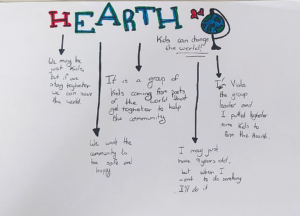
I’m preparing a community project “HeartH” … Well, you may be saying OMG she spelt it wrong well no because it’s a mix of hearth and earth so here we are HeartH.

🌎💟🌍💟🌏💟

disegno schema HeartH


I’m going to make a group to save the world by making charity or cleaning the sea etc.

Technology 🖥️📱📶

It is from when I was small that I wanted to change the world, I love nature but people play video games instead of looking at their surrounding. Even I like technology, but without exaggerating.

To the world 🤝🙋

If everyone does their part nature will be back again, that’s why will do demonstrations asking some coins to make good actions, just some coins to save the world.

Mother Nature 🌈🌊🐝🐞⚡

I would like to represent the new generation of mother nature in flesh and blood.

Expanding 👫👭

I would like to start with 2/3 friends and then expand it in more kids, I will get some people I know from other parts of the world to be the leaders of the group in that city.
It’s really difficult to do everything, but when I want to do something I just do it.

Join the group 💪😍

If you want to be part of the group contact me I’ll be happy to welcome you, don’t be shy, I’ll give you more information when you contact me, both boys and girls can join and whatever age they have, but remember to ask your parents.

For now, I’m only in Malta, but if I expand it I’ll keep you informed.

Video 🤳

Send me a video of you doing something good to the world and I will be happy to see it.

viola.hearth@gmail.com

A funny mascot

Wait a second I didn’t talk to you about our mascot Skype my beautiful rabbit, isn’t it funny a rabbit as a mascot?

viola project

★~(◠‿◕✿)

Online

For now, everyone has to stay home to be safe so our group is going to meet online and if you are bored even you can play with your friends online. Covid-19 can’t stop our creativity.
Stay home, stay safe

*•.¸♡ Viola ♡¸.•*

Contact me:

viola.hearth@gmail.com

Filed Under: Applied Ecologist, Ecological Inspirations, Ecology Community, education, family, HeartH, kids, News, Recycling, The Ecology Journal, Uncategorized

Positive effect of climate change on canopy trees does not translate to forests

July 8, 2019 By gk104 Leave a Comment

Yong Luo and colleagues recently had their paper published in Journal of Ecology. Read more about their work below.

Global change ecologists have often used trees under weak competition to examine relationships between climatic change and tree growth. Scaling up these results to a forest relies on the assumption that the climatic change-tree growth relationship is not affected by tree-level competition; especially the competition gradient from dominant trees to suppressed trees in a forest stand.

young_luo

Read the full paper online: https://doi.org/10.1111/1365-2745.13228

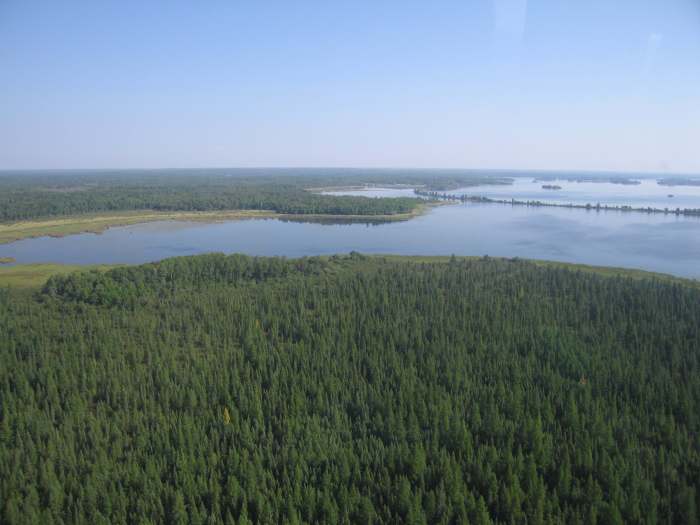
By using permanent sample plot data from the central Canadian boreal forest region, where warming did not result in water deficit, Dr. Yong Luo and his colleagues found that growth increased over time for trees under weak competition, but decreased for those under strong competition. The divergent temporal trends among trees under different levels of competition led to a non-significant change in growth at the plot level. Growth increased with regional warming, atmospheric [CO2] and water availability for trees under weak competition, supporting the hypothesis that tree growth of a boreal forest is limited by heat, water and atmospheric CO2, and climate change has positive effect on tree growth. However, for those under strong competition, the tree growth is generally negatively related to climate variables.

The results suggest that upscaling the growth responses of dominant/codominant trees to climate change to a forest or a region can lead to overestimates. Furthermore, the study suggests that increases in carbon sequestration associated with climatic change-enhanced forest growth may be weak in forests where water deficit is not an issue. Finally, the study sheds light on a mechanism of climate change-associated tree mortality. Trees experiencing weak competition grow more rapidly in response to climate change, in turn enhancing their competitiveness and further suppressing the growth of smaller trees that were already experiencing strong competition.

Yong Luo, Lakehead University & University of British Columbia, Canada

Read the full paper online: Climatic change only stimulated growth for trees under weak competition in central boreal forests

Share this:

PrintEmailTweet

Like this:

LikeLoading…

First published on 2019-07-08 10:11:41

Original Source

Filed Under: Author post, canopy, climate change, competition, ecology, forests, journal of ecology, plant ecology, plants, The Ecology Journal

Do latex and resin spur diversification? Re-examining a classic example of escape-and-radiate coevolution

July 1, 2019 By gk104 Leave a Comment

Michael Foisy and colleagues contributed a paper to our latest special feature: Macroevolutionary perspectives on biotic interactions. Find out more about their paper below.

A brief history of the project

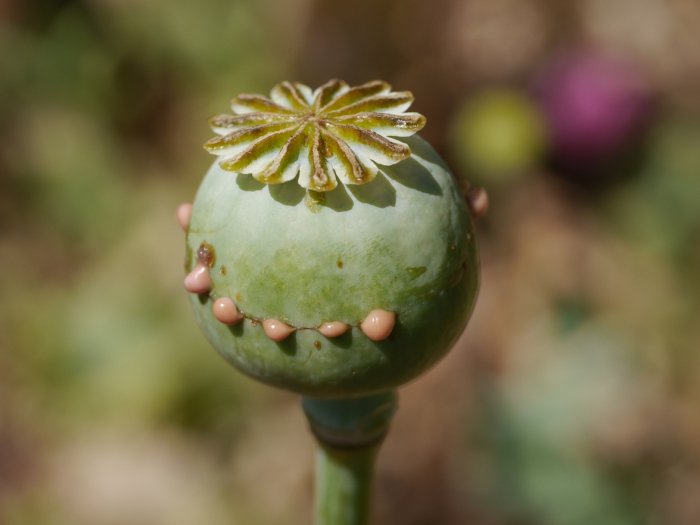
When an insect chomps on a plant, sometimes the plant tissue will release latex or resin – a “goo” that can be toxic, difficult to digest, and a real nuisance for insect mouthparts. Latex and resin are stored in pressurized canals, which, when damaged, rupture and spill their contents out in dramatic fashion (Figure 1). These canal systems have evolved many times across plants, and play an important role in defence against herbivorous insects.

1

Rich latex exuded by Papaver somniferum (Papaveraceae), near Chihuahua, Mexico (Photo: Anurag Agrawal).

In 1991, Farrell et al. conducted a now classic study testing whether plants with these pressurized canals are more diverse than closely related plants without canals. Their results were striking: 13 of the 16 comparisons revealed higher species richness when canals were present, supporting the prediction that plant defensive traits are associated with higher diversification rates (i.e. the accumulation of species over time, estimated as the net of speciation minus extinction) in plants.

Their study was one of the first to show strong support for a classic hypothesis about how coevolution between plants and insects could generate biological diversity (Ehrlich & Raven, 1964), and their work remains a prominently cited empirical example even today.

Retesting Farrell et al. 1991

In the three decades since the original study by Farrell et al. (1991), major changes to plant systematic relationships have occurred, and we now have phylogenetic comparative methods that go beyond the sign test they used. In particular, we can explicitly model trait evolution and/or diversification rates. Therefore, our goal was to reassess Farrell’s classic test of whether these defensive “goos” are associated with increased species diversity, but to do so using modern methods and data.

We collected data on the occurrence of latex and resin canals in approximately 300 families and 1000 genera of plants, and used these data (along with updated phylogenetic hypotheses for plant relationships) to test the association between canal evolution and lineage diversification rates. We tested this hypothesis at multiple scales: (i) between clades and (ii) within clades.

As usual, biology is complicated

When we updated and added to the Farrell dataset, interestingly, we no longer found strong support for a relationship between canal evolution and lineage diversification. This was surprising, and so we wanted to zoom in on some of these comparisons, to look at the tempo of diversification in relation to trait evolution.

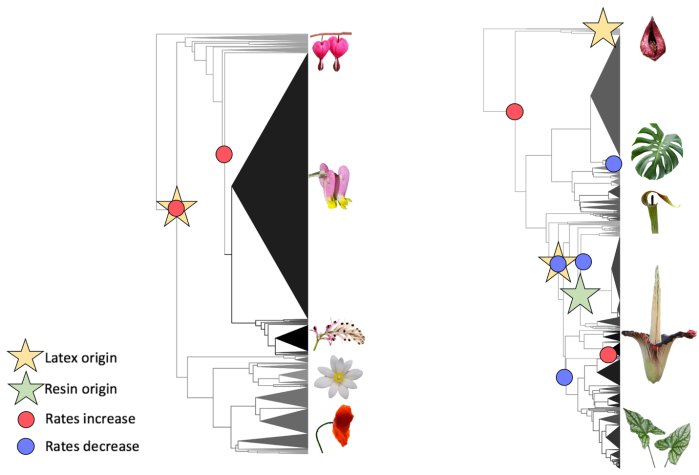
Within clades, we had enough data to look at two groups: Papaveraceae (poppies) and Araceae (arums). In poppies, the timing of latex evolution coincided with a burst of diversification; however, in Araceae, canal evolution appears to be entirely out of tempo with diversification.

2

Figure 2 (Read the full paper: https://doi.org/10.1111/1365-2745.13203)

Figure 2 is a simplified version of the figure from our paper. Canal origins are indicated by stars (yellow = latex, green = resin), while shifts in diversification rate are indicated by circles (red = increase, blue = decrease). The relative rates of diversification are shaded in grayscale (darker = higher rates). These data show that diversification coincides with latex evolution in poppies (left), but is uncoordinated with latex and resin evolution in arums (right).

Looking forwards

Thus, it seems that latex and resin canals may not be as consistently replicable drivers of lineage diversification across plants as we previously thought. Future studies could follow up on this work as more data becomes available, for example using more sophisticated models of trait dependent diversification, or taking other factors (such as clade age) into account. We are looking forward to the day that more data are available, so that this association can be even more rigorously examined in even more clades. But in the meantime, latex and resin remain super cool defensive traits with large consequences for plant fitness. Who doesn’t want a powerful goo weapon to fight their enemies?!

Michael Foisy, Loren Albert, Daniel Hughes & Marjorie Weber.

Read the full paper online: Do latex and resin canals spur plant diversification? Re-examining a classic example of escape and radiate coevolution

Share this:

PrintEmailTweet

Like this:

LikeLoading…

First published on 2019-07-01 13:25:53

Original Source

Filed Under: Author post, coevolution, ecology, Ecology and Evolution, evolution, herbivory, journal of ecology, plant ecology, plants, Special Features, speciation, The Ecology Journal

Volume 107 issue 4

June 26, 2019 By gk104 Leave a Comment

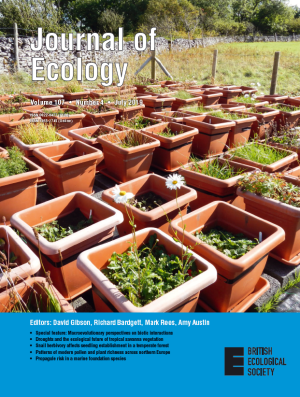
Volume 107 Issue 4 of Journal of Ecology is now available online!

vol107issue4

This latest issue of Journal of Ecology includes a special feature titled Macroevolutionary perspectives on biotic interactions. The special feature, edited by Richard Shefferson from University of Tokyo, Japan, consists of 8 research papers and an introductory editorial.

This issue also includes our annual Harper Review paper, written by Mahesh Sankaran from the National Centre for Biological Sciences, India, on the topic of droughts and tropical savanna vegetation.

The editor’s choice paper for this issue is by Amy Iler et al. and is about the effects of climate change‐induced early flowering in aspen sunflowers. You can read the author’s blog post to find out more about their work.

The cover image for this issue was taken by Benjamin Jackson and is related to De Long et al. The photo shows a mesocosm experiment investigating relationships between grassland plant above- and belowground traits and soil abiotic and biotic properties and was taken in Colt Park, Yorkshire Dales National Park, UK.

See below for some more fantastic photos submitted to the journal for this issue:

https://doi.org/10.1111/1365-2745.13160

https://doi.org/10.1111/1365-2745.13160
https://doi.org/10.1111/1365-2745.13158

https://doi.org/10.1111/1365-2745.13158
https://doi.org/10.1111/1365-2745.13146

https://doi.org/10.1111/1365-2745.13146
https://doi.org/10.1111/1365-2745.13158

https://doi.org/10.1111/1365-2745.13158

https://doi.org/10.1111/1365-2745.13158
https://doi.org/10.1111/1365-2745.13157

https://doi.org/10.1111/1365-2745.13157
https://doi.org/10.1111/1365-2745.13158

https://doi.org/10.1111/1365-2745.13158

https://doi.org/10.1111/1365-2745.13158
https://doi.org/10.1111/1365-2745.13151

https://doi.org/10.1111/1365-2745.13151
https://doi.org/10.1111/1365-2745.13158

https://doi.org/10.1111/1365-2745.13158
https://doi.org/10.1111/1365-2745.13151

https://doi.org/10.1111/1365-2745.13151
Share this:

PrintEmailTweet

Like this:

LikeLoading…

First published on 2019-06-26 14:17:44

Original Source

Filed Under: Announcements, The Ecology Journal

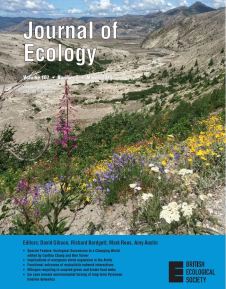
Ecological Succession in a Changing World

February 27, 2019 By Gavilab Leave a Comment

Cynthia Chang and Ben Turner are the guest editors for our latest special feature: Ecological Succession in a Changing World. Cynthia and Ben tell us more about their special feature and the inspiration behind it, below.

There is no doubt that succession is a foundation of ecology. However, when ecologists talk about succession, it often seems to be in a historical context. This has caused some to ask, “Is succession passé?” The goal of our special feature is to answer with a resounding “No!” and place succession research in a contemporary context, highlighting its relevance in modern ecological theory and pressing applied issues such as global change and restoration research.

107.2This motivated us to organize a symposium at the Ecological Society of America conference in August 2017, to highlight how studying succession brings new insights into community assembly theory, plant-belowground interactions, and restoration and global change research.

This Journal of Ecology special feature is an expanded result of these efforts. The collection of papers represent a flavor of all the different kinds of contemporary work currently being done on succession. They represent a range of biomes and ecosystems, including everything from tropical forests, volcanic landscapes, glacier retreats, grasslands, and old-fields.

This special feature presents 11 articles and an editorial that encompass 4 main themes:

1. Generalizations about succession: Prach & Walker, Chang et al., Fischer et al., and Clark et al. provide novel conclusions regarding post-disturbance successional trajectories.

2. Influence of dispersal limitation and habitat size on succession: Makoto & Wilson, van Breugel et al., and Liu et al. show how succession research can be applied to understanding restoration efforts, the effects of habitat fragmentation, as well as community response to global climate change.

3. Functional trait dynamics over the course of succession: Duffin et al. show how functional trait change over the course of succession can help ecologists understand community dynamics during ecosystem development.

4. Influence of belowground community interactions on succession: Recent advances in metagenomics allow us to better understand linkages between plant and belowground community feedbacks over the course of succession. Turner et al., Koziol & Bever, and Teste & Laliberté showcase new insights into the important role of belowground communities.

ecologicalsuccession

Read the special feature editorial: https://doi.org/10.1111/1365-2745.13132

Overall, these studies highlight the relevance of succession to modern ecological theory and novel ways for succession research to be applied to important societal issues in a rapidly changing world. Our hope is that this special issue not only highlights the continued value and relevance of successional research, but also encourages future research to be better integrated into relevant global change issues.

Cynthia Chang (University of Washington, Bothell, USA) and Ben Turner (Smithsonian Tropical Research Institute, Panama)

Read the latest issue of Journal of Ecology online, including Cynthia and Ben’s special feature: Ecological Succession in a Changing World.

Share this:

PrintEmailTweet

Like this:

LikeLoading…

First published on 2019-02-27 14:13:13

Original Source

Filed Under: Special Features, The Ecology Journal

  • Page 1
  • Page 2
  • Go to Next Page »

Primary Sidebar

Recent Posts

  • Free Blackjack Online: How to Play and Where to Discover It
  • The Excitement of Casino Slot Machines: A Guide to Playing and Winning
  • No Betting Casino Site Rewards: A Guide to Opening the Conveniences
  • Advantages of Online Casino Gambling
  • Play Slots Online For Free and Find the Best Slots Sites

Recent Comments

  • Viola on “HeartH” and Me
  • Viola on “HeartH” and Me
  • Emy on “HeartH” and Me
  • Stefania Bartolo on “HeartH” and Me

Archives

  • June 2025
  • May 2025
  • April 2025
  • January 2024
  • June 2020
  • May 2020
  • April 2020
  • July 2019
  • June 2019
  • May 2019
  • February 2019
  • January 2019

Categories

  • 168
  • aluminum
  • Announcements
  • Applied Ecologist
  • Australia
  • Author post
  • beaver
  • Bioenergy
  • blog
  • books
  • Britain
  • C&I
  • canopy
  • cardboard
  • climate change
  • coevolution
  • Community Solar
  • competition
  • Conferences
  • conservation
  • Dartmoor
  • DER
  • Ecological Inspirations
  • Ecological Reviews
  • ecology
  • Ecology and Evolution
  • Ecology Community
  • Editor's Choice
  • education
  • Energy Efficiency
  • Energy Storage
  • Europe
  • evolution
  • facts
  • family
  • favorites
  • food production
  • food security
  • forests
  • fun
  • fun facts
  • HeartH
  • herbivory
  • Home and Garden
  • horizon scan
  • Hydropower
  • journal of ecology
  • kids
  • Lifestyle
  • list
  • local recycling program
  • Microgrids
  • model
  • moorland
  • mosquito
  • News
  • Off-Grid
  • Onshore
  • Opinion & Commentary
  • paper
  • pathogens
  • Pathogens and disease
  • people and nature
  • Perspectives
  • pine marten
  • plant ecology
  • plants
  • plastic bottles
  • Project Development
  • reading
  • Recycling
  • recycling tips
  • reintroduction
  • Renewable Energy
  • Research Summary
  • Rewilding
  • rice
  • Rooftop
  • salinity
  • salt-tolerant rice
  • Scotland
  • sea eagle
  • self-willed nature
  • small pieces
  • soil
  • Solar
  • spatial spread
  • Special Features
  • speciation
  • spring cleaning
  • Storage
  • sustainability
  • sustainable
  • teaching
  • The Ecology Journal
  • tips
  • Top 5
  • UK
  • Uncategorized
  • wild boar
  • Wind Power
  • Wolbachia
  • Women in Science
  • Zika

Copyright © 2026 · Made by Gavilab